A Landmark Celebration Amid Regional Tensions
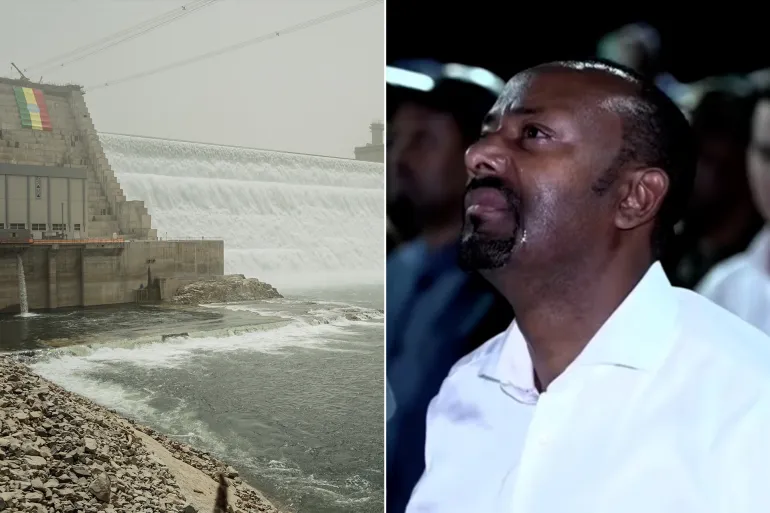
In a display of national pride, Ethiopia has inaugurated the Grand Ethiopian Renaissance Dam (GERD) on the Blue Nile. Addis Ababa meticulously planned the event as both a domestic celebration and an African milestone symbolizing development for the entire continent.
Since construction began in 2011, the project has triggered fierce disputes with downstream nations Egypt and Sudan. Both depend heavily on Nile waters, particularly for agriculture, and view Ethiopia’s unilateral approach as a direct threat to their vital interests.
Years of Stalled Negotiations
Egypt, followed by Sudan, engaged in protracted negotiations with Ethiopia, which repeatedly delayed talks to gain time. Cairo sought international mediation, most notably from the United States, but all efforts failed to secure a binding agreement on filling schedules, drought management, or operational protocols.
Ethiopia dismissed these demands as internal matters, while Cairo and Khartoum insisted they align with international norms for managing shared rivers. Both Egypt and Sudan declined Ethiopia’s invitation to attend the inauguration, signaling deep anger over Addis Ababa’s unilateral stance since the first filling in 2020.
Egypt maintains it still has tools to counter Ethiopia’s efforts to monopolize the Nile or expand its regional influence.

Domestic Consolidation and Global Messaging
Ethiopia has portrayed the dam as a unifying symbol to overcome deep ethnic divides among Oromo, Tigrayans, Amhara, and others. Domestically, it has served to rally a fragmented nation.
Internationally, Addis Ababa has framed Egypt’s objections as a form of “white arrogance,” casting North African states as obstructing sub-Saharan progress. This racialized narrative gained sympathy across Africa, where Egypt and even Sudan struggled to compete in public messaging.
Ethiopia also invoked the 2010 Entebbe Agreement, which entered into force in 2024, granting upstream states greater freedom to build projects without consulting downstream countries. Additionally, it won support from major powers—through construction partnerships with China, Germany, and Italy, and by appealing to Russia and China, both of which control rivers crossing into other states.

Cairo Questions the Dam’s Performance
Egypt views the inauguration as premature and misleading. It argues that GERD has failed to deliver promised development, operating only six of its planned sixteen turbines and generating 1,800 megawatts out of a targeted 5,600.
Cairo warns the dam poses unresolved dangers: no clear drought management plan, unclear safety standards, and massive water loads—64 billion cubic meters—stored in a geologically unstable region. Egyptian experts fear potential collapses triggered by seismic activity.
Egypt’s Strategic Countermoves
Egypt and Sudan are considering returning to the UN Security Council under Chapters VI and VII to curb Ethiopia’s unilateral actions. They aim to use the Nile Basin Initiative to rally other upstream states toward a new agreement to replace Entebbe, possibly involving Tanzania, Kenya, Uganda, and the Democratic Republic of Congo.
Cairo is also strengthening ties with Somalia and Eritrea. In August 2024, Egypt and Somalia agreed to deploy 4,000 Egyptian troops under the AUSSOM mission from 2025 to 2029 to secure Somalia after ATMIS’s withdrawal. Egypt sent military equipment in September 2024, a move Ethiopia’s ambassador to Mogadishu called a “strategic challenge.”
In Eritrea, Cairo is deepening cooperation based on shared opposition to the Tigray People’s Liberation Front, building a stronger partnership on the Red Sea.
Domestic Water Projects and Future Risks
At home, Egypt is implementing massive water efficiency and recycling projects. The Mahsama plant now produces 1 million cubic meters of treated wastewater daily to irrigate 60,000 acres. Eleven desalination plants operate with a combined capacity of 485,000 cubic meters per day, with plans to reach 23 plants by 2030 producing 2.65 million cubic meters daily.

Despite the dam’s inauguration, the Nile Basin remains tense. As The Africa Times observes, the GERD may mark not an end to conflict but the start of a new phase of escalation whose scope is still uncertain.