THE AFRICA TIMES | SOUTH SUDAN —
JUBA – South Sudan aims to amend the Revitalised Agreement on the Resolution of the Conflict in South Sudan (R-ARCSS). The goal is to conduct national elections in 2026. This move has sparked a backlash from the Sudan People’s Liberation Movement in Opposition (SPLM-IO).
The SPLM-IO claims exclusion from the process. The party also does not recognize the decisions made.
## Government Announces Plans for Constitutional Amendments
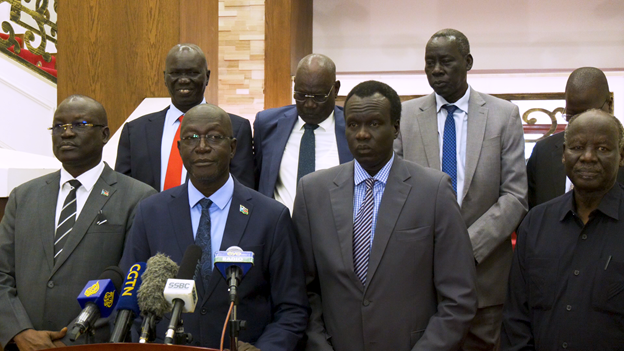
The resolutions came from an expanded Presidency meeting. This meeting occurred on December 10 in Juba. President Salva Kiir chaired the meeting, and senior officials attended.
Minister of Presidential Affairs Africano Mande communicated the meeting’s results. He presented it as a sign of unity among signatories. The minister also called it a step toward preparing for elections.
Mande emphasized that the approved timeline is final. “There will be no further extension of the R-ARCSS transitional period,” he stated. This signals a change from past delays.
### New Committee to Draft Amendments

The Presidency plans to amend sections of the peace agreement and the constitution. A committee will draft the amendments and present them to political parties. This committee will also address disputes during implementation. The aim is a legal framework for elections by December 2026.
## Conflicting Views on the Path to Elections
Officials presented the meeting as a key moment to restore political progress. They stressed the need to complete transitional security arrangements. Chapter Two of the R-ARCSS has faced years of delays. Mande called for immediate action to deploy unified forces.
### SPLM-IO Rejects Resolutions
Within 24 hours, the SPLM-IO rejected the resolutions. The party questioned the legitimacy of the December 10 meeting. Joseph Malwal Dong issued the statement on December 11.
The SPLM-IO stated that no officials from their party attended. They argued that the peace implementation oversight committee was reconstituted without their input. This effectively excluded them from decision-making.
The SPLM-IO accused the government of dismantling the peace agreement. The party stated that the amendment of R-ARCSS is meant to use elections as a pretext. The resolutions, therefore, lack inclusivity and are not binding.
### Concerns About Trust and Security
The opposing positions reveal growing mistrust. The Presidency insists on the electoral timeline and necessary amendments. The SPLM-IO cautions that this process risks weakening the agreement and elections.
Security remains a concern. Transitional security arrangements are incomplete after repeated commitments since 2018. Violence, uneven troop deployments, and administrative issues could disrupt the vote.
Analysts suggest the SPLM-IO boycott could complicate preparations. It could become difficult to claim an inclusive electoral process. Constitutional and legal reforms require broad consensus, so any incomplete participation poses risks.