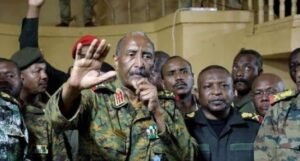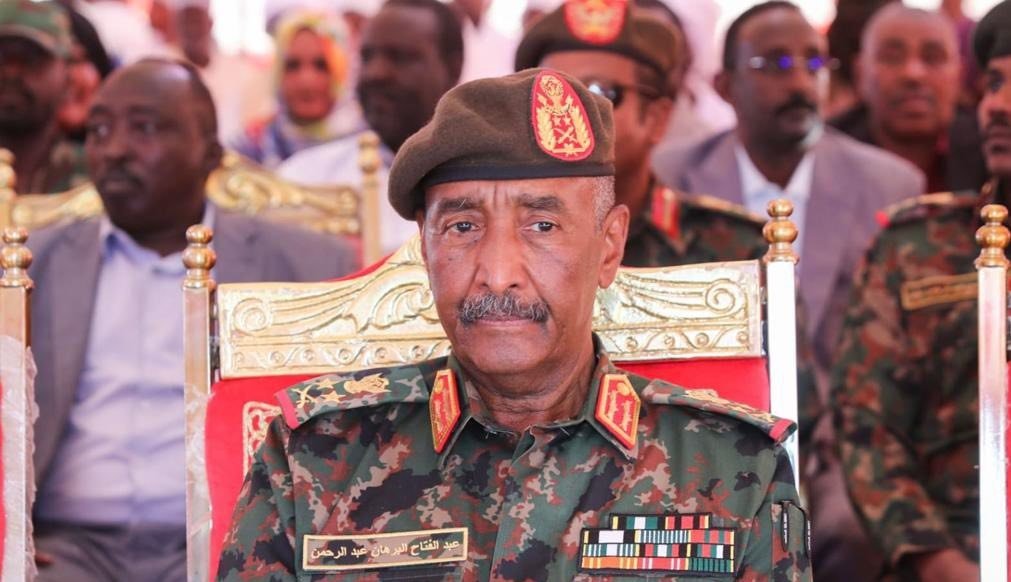
General Abdelfattah al-Burhan, Sudan’s army chief, proposed reinstating the original independence flag. He also reaffirmed his opposition to settlements that exclude the disarmament of the Rapid Support Forces (RSF). Burhan made these remarks at a funeral in Port Sudan. The ceremony honored fighters from the Joint Forces of former Darfur rebel groups.
## Burhan’s Stance on Political Settlement
Burhan stated that any initiative failing to mandate the removal of the “rebel militia” is unacceptable. He argued that the widespread bloodshed limits negotiation with the RSF. The destruction is particularly evident in Darfur and El Fasher areas.
Burhan pledged that those responsible for war crimes would face justice. He said they do not deserve to live among Sudanese citizens. He also renewed his call for national unity to defeat the RSF. He urged civilians to join the fight.
### Support for Allied Forces
Burhan praised Minni Arko Minawi, governor of the Darfur region. He commended the Joint Force and armed groups fighting with the Sudanese Armed Forces (SAF). Burhan thanked Minawi for prioritizing the nation. He acknowledged his commitment to restoring people’s rights.
## Proposal to Revive Independence Flag
In a symbolic gesture, Burhan suggested reviving Sudan’s original national flag. This flag was first raised at independence in 1956. He advocated for a return to the tricolor design.
He stated that rebuilding the Sudanese state requires redefining its foundations and identity. He believes that this move would help establish a real state with sound foundations.
![Sudan’s independence-era flag. [Photo courtesy]](https://i0.wp.com/www.sudanspost.com/wp-content/uploads/2025/12/sudan-1956-to-1969-flag-with-eyelets-145119-1-p.png?resize=938%2C468&ssl=1)
### Historical Context of the Flags
Sudan’s independence flag, used from 1956 to 1970, had blue, yellow, and green stripes. Blue represented the Nile, yellow symbolized the desert, and green stood for agriculture.
The current flag, adopted in 1970, uses the Pan-Arab color scheme. It features red, white, and black stripes with a green triangle. The colors symbolize struggle, peace, historical struggles, Islam, and prosperity.
## Impact of Ongoing Conflict
Burhan’s proposal marks the first time the SAF has considered reversing national symbolism since the war started. The SAF is facing increased battlefield pressure. The RSF recently captured major urban and military centers across Darfur and Kordofan.
Fighting continues to spread despite international efforts to revive ceasefire talks. The RSF captured the army’s 22nd infantry division in Babanusa, West Kordofan State recently.