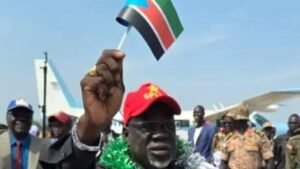
President Salva Kiir enacted a series of decrees Tuesday night. These decrees implemented significant personnel changes across key governmental institutions. The reshuffle affected leadership in the ministries of Water and Irrigation, and Petroleum.
Additionally, the National Communications Authority and Nile Petroleum Corporation also saw changes. The decrees resulted in both the removal and appointment of top officials.
Government Reshuffle Details
Ministry of Water and Irrigation
Chol Deng Thon was removed from his role as Technical Advisor in the Ministry of Water and Irrigation. The reasons for his dismissal were not disclosed in the announcement. This change occurs amidst concerns about water management and infrastructure.
Flooding and stalled projects are also major issues the ministry faces. The removal of Thon may signal a shift in approach to these challenges.
Ministry of Petroleum
Deng Lual Wol was dismissed from his position as Undersecretary in the Ministry of Petroleum. Dr. Chol Deng Thon Abel was subsequently appointed as the new Undersecretary. This places him in charge of a crucial sector.
The Ministry of Petroleum oversees South Sudan’s oil production and revenue. Oil revenue forms the backbone of the national economy. The ministry has experienced frequent leadership turnover in recent years.
National Communications Authority
Gieth Kon Mathiang was removed from his position as Director General of the National Communications Authority (NCA). Rizik Dominic has been appointed as the new head of this regulatory body.
The NCA has faced scrutiny regarding internet regulation and data costs. Digital infrastructure gaps are also an area of concern. These challenges make the leadership shift particularly noteworthy.
Nile Petroleum Corporation
Ayuel Ngor Kacgor was relieved of his duties as Managing Director at Nile Petroleum Corporation (Nilepet). Emmanuel Athiei Ayual will now lead the state-owned enterprise.
Nilepet is central to the government’s oil sector reform efforts. These efforts seek to strengthen transparency, and boost national participation, and foster value chain growth.
Implications and Concerns
Some officials, like Thon, served for less than two months before being affected by the decrees. President Kiir views these frequent changes as a means to finding solutions. However, civil society groups express concern over the disruptions caused by reshuffles.
These changes can weaken institutional memory and delay long-term planning. Constant changes at senior levels can lead to policy reversals. Stalled projects and uncertainty within government can also occur.
Ultimately, service delivery and governmental effectiveness are undermined. The impact of these reshuffles remains a subject of ongoing debate within South Sudan.