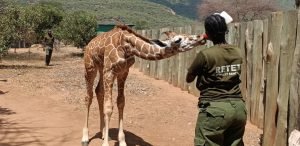
Deep within Samburu County, the Namunyak Conservancy serves as a haven. This sanctuary provides orphaned elephant calves a second opportunity at life.
Established in 2016, Reteti Elephant Sanctuary is the first indigenous community-owned sanctuary. It focuses on rescuing, rehabilitating, and releasing orphaned elephants back into the wild.
The sanctuary receives support from the Kenya Wildlife Service, Samburu County, and the local community. Reteti stands as an example of successful locally-led conservation.
Causes of Orphaned Calves
Russia Lenanyokie, a sanctuary keeper, discussed reasons for calves becoming orphaned. These reasons include natural deaths of mothers or separation from the herd. He added that most rescues occur when calves fall into man-made wells while mothers seek water.
During the dry season, elephants often dig for water in dry riverbeds. Samburu families deepen these wells, aiming to trap water overnight for livestock and domestic purposes.
Wild animals frequent these wells at night. The wells deepen as the dry season progresses. Baby elephants, seeking water, sometimes lose their footing and fall in.
Rescue Efforts
Herds struggle to extract trapped calves. They will eventually move on. In the past, Samburu warriors attempted rescues, often without success. Calves would then be left.
Currently, community movements enable residents to alert Reteti if a calf is trapped. This ensures the calf’s safety. Upon receiving such a call, sanctuary staff rush to the location.
The team then hoists the calf out and waits for the herd to return. Elephants have habitual drinking locations.
The calf is reunited if the herd returns. Sanctuary staff monitor for 72 hours; otherwise, they take the calf to the sanctuary.
Once at the sanctuary, the calf receives an examination and treatment for any injuries. Staff provide feeding. They also assign a dedicated caretaker.
Life at the Sanctuary
The sanctuary currently houses 45 baby elephants of varying ages. They receive goat milk every three hours, both day and night.
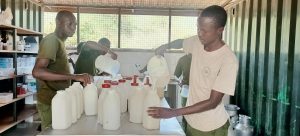
Elephants and goats share similar habitats and browse the same trees. Therefore, goats milk supplemented with ground moringa leaves, honey, vitamins, algae and coconut oil is fed.
The Samburu community benefits directly from the sanctuary. The sanctuary employs 120 local keepers. Sixty percent of tourism revenue supports local schools, bursaries, and development projects.
Sustaining sanctuary operations and the entire conservancy poses a significant challenge. As a result, World Animal Protection has partnered with Reteti.
Partnership with World Animal Protection
The partnership with World Animal Protection aims to improve the lives of rescued elephants. This support extends to veterinary care, the goat milk program, and assisting the rewilding process.
World Animal Protection’s Research and Planning Manager, Dr. Patrick Muinde, spoke on the partnership. Apart from financial support for rehabilitation and rewilding, 1,250 Samburu women supply 1,000 liters of goat milk, daily at Sh 180 per liter.
The milk is boiled at 70 degrees Celsius to eliminate germs. It is then refrigerated overnight and supplemented for nutritional value.
Dr. Muinde emphasized their organization’s focus on returning animals to the wild. World Animal Protection regards Reteti as a suitable partner, as their core mission centers on animal welfare.
The partnership addresses the increasing need for support during the dry season. This is when more calves require rescue, increasing the need for supplies, water, and veterinary care.
Sanctuary’s Impact
Reteti has released 26 elephants into the wild. The sanctuary has expanded its mission. Additionally, it houses rescued giraffes, ostriches, kudus, oryx, and formerly a rhino and a buffalo, all released back into the wild.