THE AFRICA TIMES | EGYPT —
Unearthing Ancient Diplomacy: The Amarna Letters
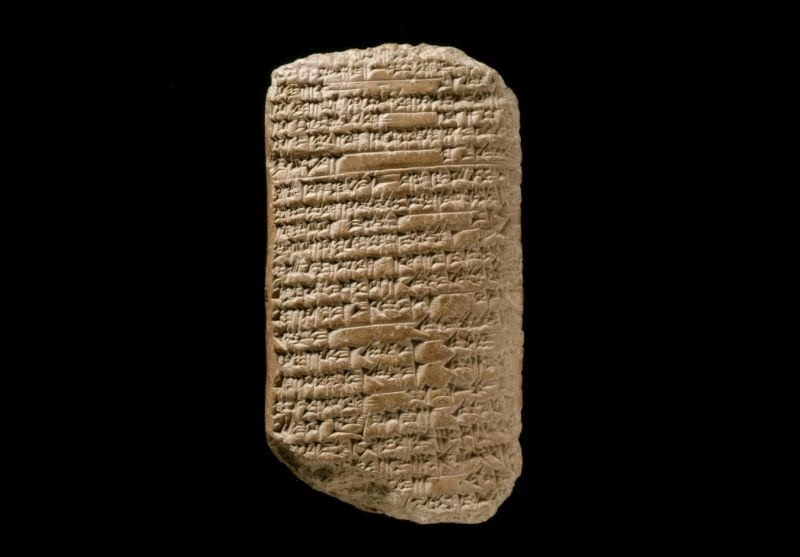
The Amarna Letters, a collection of 3,000-year-old clay tablets, were discovered in Egypt. These tablets have significantly altered the understanding of ancient Egyptian diplomacy. They provide insight into international relations during that period. These records offer a fresh perspective on Egypt’s role in the ancient world.
These tablets differ from traditional Egyptian papyrus. They are written in cuneiform Akkadian, the common language of neighboring civilizations. This indicates the messages came from outside Egypt. The letters were crucial for understanding Egypt’s interactions.
Dating Back to Akhenaten’s Reign
The Amarna Letters date back to the 14th century BCE. This was during the reign of Pharaoh Akhenaten. They capture communications between Egyptian rulers and foreign leaders. Vassal lords and powerful kings also engaged in correspondence.
Content and Significance of the Letters
Some letters conveyed deference and reports from subordinates. Others announced gifts and marriage proposals between equals. The letters functioned beyond mere correspondence. They were ceremonial objects read aloud.
These objects were stored for both ceremonial and archival purposes. Therefore, the Amarna Letters redefine ancient Egypt. They reveal Egypt was not an isolated civilization. Rather, it was a major player within a complex international system.
Reassessing Ancient Egypt’s Role
The Amarna Letters suggest a system governed by codified rules. Intricate rituals formed the basis for governance. This discovery reshapes perceptions of ancient Egypt’s place in global affairs. The tablets provide invaluable insights into diplomacy.
Understanding diplomatic exchanges of that period advances scholarly understanding. The texts highlight Egypt’s influence within a broader regional context. Ongoing research continues to unlock secrets within the Amarna letters.