“`html
THE AFRICA TIMES | MOROCCO —
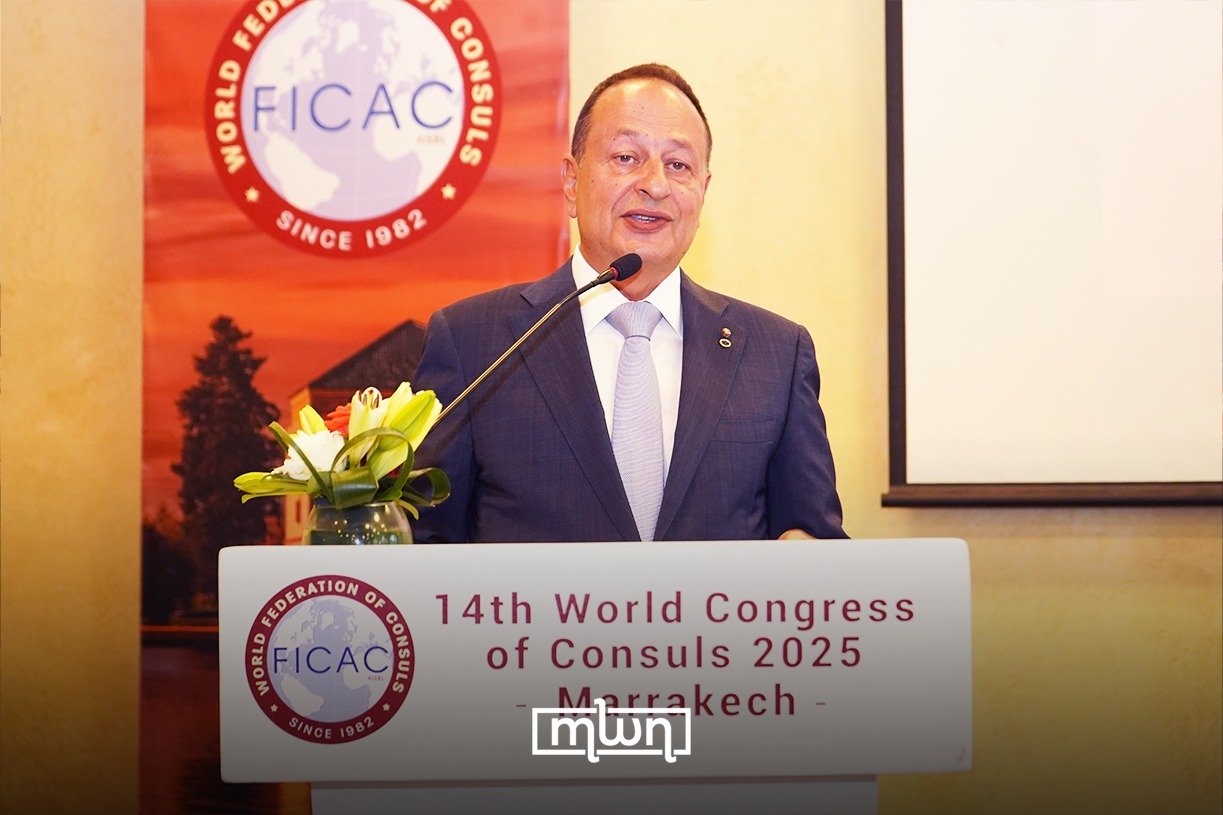
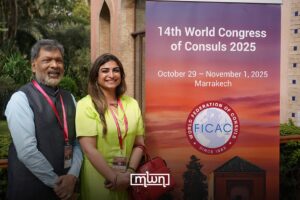
Marrakech played host to the inauguration of the 14th World Congress of Consuls. The event gathered 150 honorary consuls from across the globe, marking the first time the summit has been held in Africa. The international diplomatic summit occurred from October 29 to November 1.
The Congress has therefore positioned Morocco at the center of contemporary diplomacy.
Congress Overview
The World Federation of Consuls (FICAC) and the Union of Honorary Consuls in Morocco (UCHM) jointly organized the Congress. The central aim is to examine the evolution of consular diplomacy. This event indicates Morocco’s important role in parallel diplomacy and international cooperation.
FICAC’s Role
FICAC’s role is significant. FICAC was founded in Copenhagen on October 2, 1982, by seven countries. These countries are Denmark, Finland, Greece, Iceland, Italy, Norway, and Sweden.
Now, FICAC unites over 9,000 consuls from 95 countries. The organization promotes mutual understanding and constructive diplomatic dialogue.
UCHM’s Contribution
UCHM was was established in 2015.
The organization represents honorary consuls accredited to Morocco. UCHM works to facilitate economic, consular, social, and cultural exchanges.
Honorary consuls serve as official representatives. They perform vital diplomatic functions without being career diplomats.
They protect the rights of foreign citizens and issue travel documents. Also, they promote economic relations and foster cultural exchanges. Honorary consuls leverage local connections to build bridges between nations.
The opening session included addresses from key figures. FICAC President Nikolaos K. Margaropoulos and UCHM President Atman Haloui both spoke. Following their remarks, former Croatian President Kolinda Grabar-Kitarović delivered a keynote speech.
The Congress united voices from five continents
Morocco’s Role in the Congress
Atman Haloui emphasized Morocco’s position. He described it as a welcoming crossroads of civilizations. During his remarks, Haloui highlighted Morocco’s progress.
He mentioned the accelerated development witnessed under King Mohammed VI’s leadership. Haloui noted many achievements in the economic, commercial, social, and cultural sectors.
Haloui outlined three main reasons for hosting the Congress in Morocco. The reasons included Morocco’s status as a crossroads. The large number of accredited honorary consuls was another reason. Finally, Morocco’s commitment to developing the honorary consul role alongside FICAC was critical.
Haloui described the honorary consul role as fulfilling and challenging. He noted the responsibility, commitment, and availability required. He also expressed pride in UCHM’s position as a reliable FICAC partner.
FICAC’s Transformation
FICAC President Nikolaos K. Margaropoulos spoke about the Federation’s transformation. Margaropoulos noted regional conferences held across five continents. These included events in Ghana, Honduras, the Philippines, Kazakhstan, and Greece.
Margaropoulos described educational initiatives launched by FICAC. They include the Executive Diploma in Diplomacy with Anatolia University’s collaboration. He also announced the publication titled “Contemporary Diplomatic and Consular Relations.”
The FICAC President outlined partnerships. The partnerships were established with the International Chamber of Commerce along with over 20 universities across continents.
Margaropoulos also highlighted Morocco’s strategic position. He emphasized its role in bridging continents, cultures, and civilizations.
Diplomacy in Challenging Times
True diplomacy builds trust, not dominance
Former Croatian President Kolinda Grabar-Kitarović gave a keynote speech. She focused on diplomacy during challenging times. She emphasized the need for empathy.
Grabar-Kitarović reflected on her diplomatic career. She shared personal connections that opened doors when politics could not. Diplomacy builds trust one conversation at a time, she stated.
The former president praised honorary consuls. She considered them the “unsung heroes of modern diplomacy.” She noted their crucial role in turbulent times and disasters.