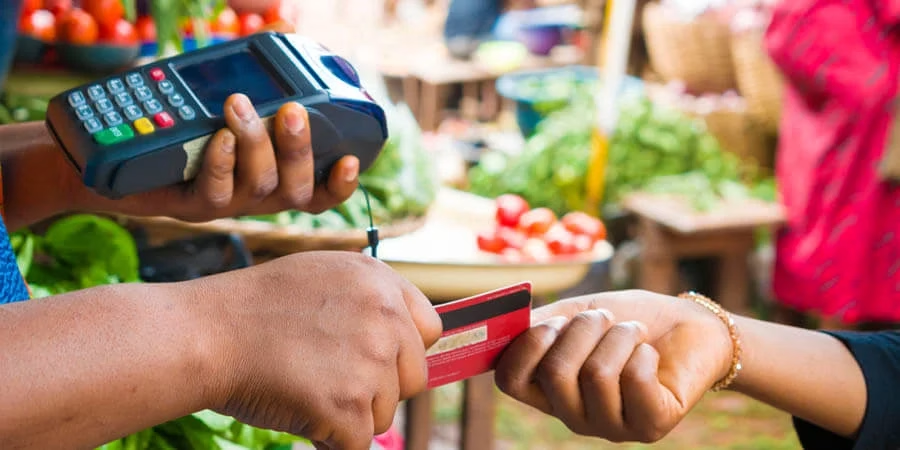
Africa’s Rising Role in Global Growth
Africa is fast emerging as the world’s next frontier for growth. By 2050, more than one in four people on the planet will be African, according to the United Nations Economic Commission for Africa. With the youngest population globally, the continent is increasingly recognised as a centre of innovation, especially in financial services.
Behind this transformation lies a critical yet often overlooked lifeline: cross-border payments. These transfers fund education, healthcare, and small businesses, forming the backbone of many African economies. In 2024, remittances to sub-Saharan Africa reached $92 billion, according to the World Bank. For 19 African countries, they account for over 4% of GDP.
The High Cost of Sending Money
Despite their importance, Africa remains the most expensive region in the world for sending money. The World Bank’s Remittance Prices Worldwide Quarterly shows that sending $200 costs an average of 8.4% in fees—well above the global average of 6.4%. Meeting the UN Sustainable Development Goal of reducing this to 3% would free up billions for households and communities.
When fees are too high, families lose out, and funds often flow through informal channels that are opaque and risky. Lowering costs and expanding access to secure digital payment solutions is essential for financial inclusion and broader economic development.
Why Cross-Border Payments Matter
Cross-border payments are more than financial transactions—they are lifelines. In South Africa, one of the continent’s largest remittance-sending markets, these transfers sustain families in Zimbabwe, Mozambique, and Lesotho. They improve household welfare and stimulate local economies.

However, Africa’s fragmented financial landscape creates hurdles. The continent’s 54 nations each have their own currency, central bank, and regulatory framework. Traditional banking relies on multiple intermediaries, adding fees and delays. Transfers can take days to clear, and costs remain high—impacting the many who rely on small sums for daily needs.
Innovation Shows the Way Forward
Despite these barriers, Africa has pioneered some of the world’s most innovative financial solutions. Mobile money platforms like M-Pesa in Kenya have leapfrogged traditional banking, bringing millions into the formal financial system.
New initiatives are building on this momentum. The Pan-African Payment and Settlement System (PAPSS), launched by the African Export-Import Bank, aims to reduce the cost and complexity of cross-border transactions.

In South Africa, PayInc (formerly BankservAfrica) has rolled out the Rapid Payments Programme (PayShap) in partnership with the South African Reserve Bank and the Payments Association of South Africa. This system enables instant, low-cost digital transfers using only a cellphone number. BankservAfrica has highlighted that interoperable infrastructure will be key to scaling secure and affordable cross-border solutions.
Regulation Catching Up
For innovation to succeed, regulation must keep pace. Regional integration efforts like the African Continental Free Trade Area (AfCFTA) depend on modern, interoperable payment systems.
Encouragingly, regulators are moving in this direction. Central banks in Nigeria, Ghana, and South Africa are piloting digital currencies, while sandboxes in Kenya and South Africa allow FinTechs to test new products under supervision. Updated approaches to know your customer (KYC) and anti-money laundering (AML) rules are also enabling digital onboarding while maintaining compliance to build trust.
Inclusion as the Ultimate Goal
At its core, the push to improve cross-border payments is about people. Nearly 500 million Africans remain unbanked, including around 16 million adults in South Africa. Without access to affordable financial services, many are locked out of opportunities to build credit, grow businesses, or save for the future.
Lowering remittance costs, expanding mobile money networks, and introducing secure digital payment options can bring millions more into the formal financial system. This creates a powerful financial inclusion flywheel: as more people access affordable services, they strengthen household resilience, fuel economic growth, and drive further inclusion.