THE AFRICA TIMES | SUDAN —
NYALA – Mohamed Hamdan Dagalo, commander of the Rapid Support Forces (RSF), declared a three-month humanitarian truce. The announcement directly challenges the Sudanese army chief’s rejection of a U.S.-backed peace plan. The army chief rejected the plan just a day earlier.
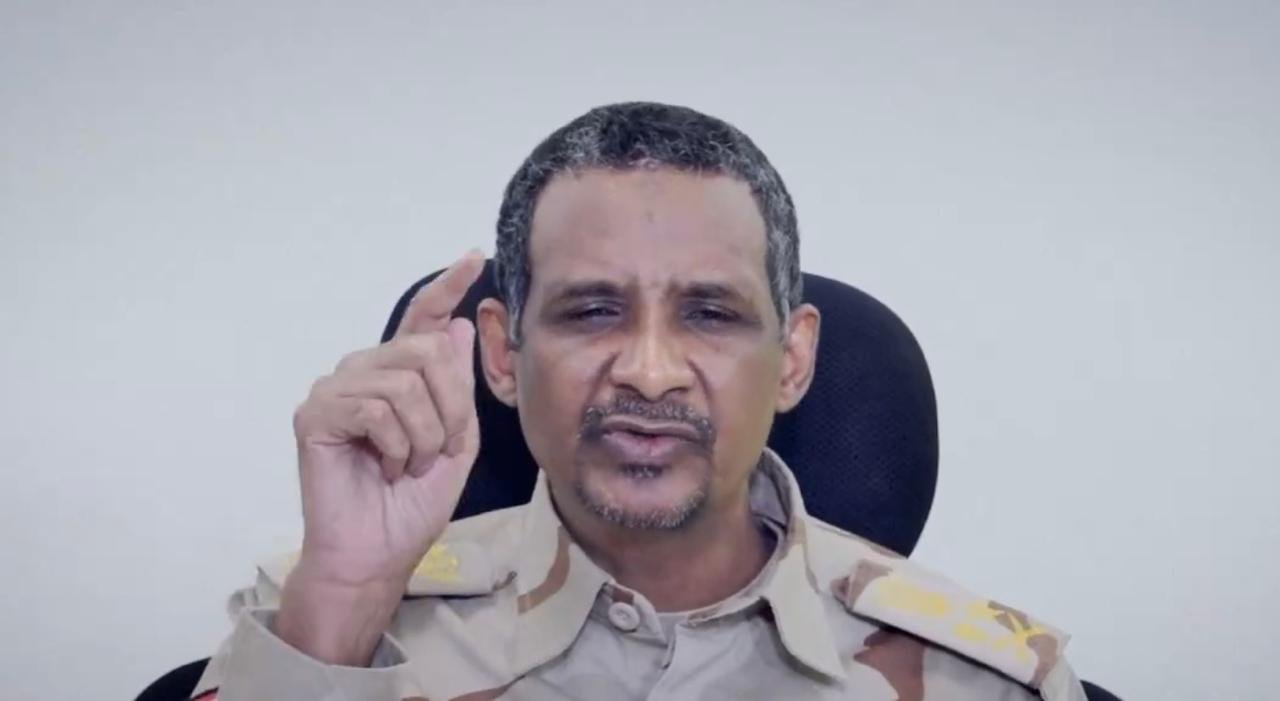
In a pre-recorded address, Hemedti announced the RSF’s acceptance of the humanitarian pause. This pause aims to “strengthen the protection of civilians” and facilitate aid delivery. He cited efforts by the Quad nations, the African Union, and IGAD.
Divergent Stances on Peace Initiatives
RSF’s Acceptance vs. Army’s Rejection
The move positions the RSF as willing to accept international proposals. This contrasts with the army’s stance, led by Abdelfattah al-Burhan. Al-Burhan condemned the U.S. proposal as an attempt to dismantle the armed forces. He also stated that it legitimized the RSF.
Hemedti stressed that ending the bloodshed has become an “urgent duty.” He stated that the ongoing war has exhausted the Sudanese people. He called on the Quad countries to encourage the army to respond to the RSF’s commitment.
The truce, according to Hemedti, would be the first step towards a political solution. This solution has to address the root causes of the crisis.
“The Rapid Support Forces and all forces allied with us hereby declare our immediate approval of a humanitarian truce extending for three months, in order to strengthen the protection of civilians, facilitate the delivery of humanitarian aid, and open a window of hope for our people who have been exhausted by this war,” he said.
Call for International Intervention
“We hope that the Quad countries will play their role in encouraging the other party to respond to this step and to the international efforts aimed at achieving the interests of the Sudanese people,” he added. Hemedti hopes that international actors can help push for a resolution.
Commitments to Humanitarian Aid and Accountability
Easing Civilian Suffering
The RSF commander outlined his forces’ commitments to easing civilian suffering. These commitments include securing the movement of humanitarian workers. They also include ensuring aid reaches all affected areas without restrictions. The protection of warehouses belonging to humanitarian organizations also remains a priority.
He announced his approval for establishing a field-based monitoring mechanism for the humanitarian truce. The Quad countries, the African Union, and IGAD would lead the mechanism. It will ensure implementation and safe delivery of assistance.
“We announce our approval for the establishment of a field monitoring mechanism for the humanitarian truce, to be led by the Quad countries, the African Union, and IGAD, in order to ensure its implementation and the safe delivery of humanitarian assistance to all those in need,” he said.
Addressing Atrocities and Ensuring Justice
Addressing reports of atrocities, Hemedti reaffirmed the RSF’s commitment to holding perpetrators accountable. He stated that justice will take its course under national and international law. He highlighted the initiation of professional investigative procedures with public results.
“We reaffirm our full commitment to holding accountable any person proven to be involved in violations against civilians, under any justification or circumstance. We have initiated clear and professional investigative procedures, and the results will be made public with full transparency once completed,” he said.
“We stress that justice will take its course according to national laws and international law, and that no perpetrator of violations — regardless of their position or rank — will escape accountability,” he added.
Exclusion of Islamists in Political Process
Hemedti reaffirmed his acceptance of an inclusive political process. He explicitly excluded Islamists such as the National Congress Party. He also excluded its fronts, arguing they bear responsibility for decades of national tragedy.
Al-Burhan’s Rejection of Peace Proposal
Criticism of U.S.-Backed Plan
Hemedti’s declaration came after General al-Burhan criticized the U.S. proposal. Al-Burhan called the draft put forth by the Quad “the worst yet” submitted to the military leadership.
Al-Burhan asserted the proposal called for dissolving Sudan’s security services. He stated that it allowed RSF units to remain in captured cities. These cities are in Darfur and Kordofan states.
“Any initiative that recognizes the rebels, we do not accept,” al-Burhan had said, referring to the RSF.