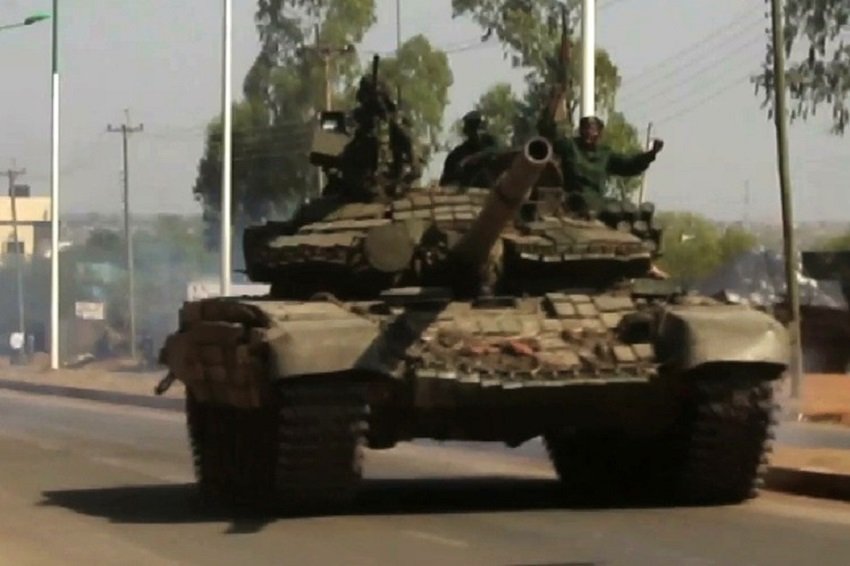
JUBA – Today marks twelve years since fighting erupted in Juba, South Sudan. The violence triggered a civil war that devolved into ethnic conflict. This started with the mass killing of Nuer civilians. Retaliatory attacks targeted Dinka communities in Upper Nile.
The violence quickly extended from the presidential guard barracks. Within hours, it engulfed Jonglei, Upper Nile, and Unity states. This set the stage for a civil war. The conflict reshaped the political and security landscape of the nation.
Humanitarian Crisis and Peace Efforts
The December 2013 killings created a major displacement crisis. Roughly 400,000 South Sudanese became internally displaced. Hundreds of thousands sought refuge in UN protection sites.
Many others fled to Uganda, Kenya, Ethiopia, and Sudan. These refugees formed long-term communities. Successive political agreements sought to end the fighting. These included the 2015 peace deal and its 2018 revitalized version.
Implementation faltered due to renewed clashes and splintered armed groups. Deep mistrust also undermined progress. The Nuer and Dinka ethnic groups have dominated South Sudan’s politics since independence.
Lingering Legacy and Reconciliation
The legacy of the massacres continues to shape South Sudan’s transition. Survivors report that reconciliation mechanisms remain unrealized. The proposed Hybrid Court has yet to be established.
Civil society leaders warn that the absence of accountability allows wartime narratives to harden. This fuels local conflicts and undermines confidence in the peace process. The absence of justice has dire consequences.
This report revisits the events of December 2013. It considers the perspectives of soldiers, survivors, and community leaders. It explores how political leaders have struggled with this history. South Sudan must reckon with the violence shaping its politics.
Fighting at the presidential guard barracks
Gunfire erupted at the presidential guards around 9:00 PM local time. Accounts of what occurred are contradictory. One account says that President Salva Kiir Mayardit ordered Marial Chinuong to disarm Nuer soldiers.
Marial reportedly informed James Hoth Mai of this order. Hoth advised Marial to disarm the entire battalion. However, Marial allegedly rearmed Dinka soldiers. This triggered panic among Nuer soldiers.
The Nuer soldiers then broke into the armory and rearmed themselves. This group was led by Colonel James Lok Tang Raet. Armed confrontation ensued around 9:32 PM. Fighting also broke out at the SPLA headquarters.
A Sudan People’s Liberation Movement (SPLM) convention was ongoing that day. The goal was to select a candidate for the 2015 elections. Riek Machar and Pagan Amum boycotted the meeting according to accounts.
Machar allegedly feared an attack by Kiir’s loyalists. Consequently, Kiir was told that they were planning a coup. Machar remained at his residence until December 16, 2013. He then fled, fearing arrest.
An eyewitness reported meeting Machar outside Juba later. Machar was heading toward Terekeka. Clement Wani Konga provided Machar with vehicles. Machar used these to travel through the bush.
He used a boat to cross to Mangala Payam. There, he met Nuer SPLA officers on December 18. He then contacted Maj. Gen. Peter Gatdet Yaka. Machar’s escape unfolded under constant pressure.
Fighting cut off normal routes out of the capital. This forced the group to move through difficult terrain. “After we were overwhelmed, we were dislodged into the bush,” he said.
Machar emerged from hiding late on December 16. He coordinated the withdrawal in person. This signaled a shift from evasion to organized flight. He crossed a river and awaited deserters.
The door-to-door killings of ethnic Nuer civilians
The fighting in the barracks led to targeted ethnic violence. Government forces systematically killed Nuer civilians. Accounts detail house-to-house searches. Nuer men and boys were rounded up and executed.
One horrific incident allegedly occurred at the Gudele Police Station. Many Nuer men were reportedly executed after being detained. Precise figures remain disputed due to the lack of an official investigation.
Reports indicate that at least 300-400 civilians were killed in Juba. Some estimates place the total casualty figure in the thousands. The violence was ethnically motivated. Nuer civilians were deliberately targeted.
Hundreds of thousands of civilians fled in terror. Their primary destination was UN Protection of Civilians (PoC) sites. These UNMISS bases became islands of relative safety. Thousands still remain there today.
One Nuer survivor in a Juba PoC camp stated that he cannot return home. He says that it is unsafe for Nuer people. He emphasized that the residents did not choose to stay. They remain due to security threats.
He expressed deep mistrust toward the government. “The government doesn’t know their real enemy.” They consider all Nuer as ‘rebels’ according to his statement. Chuol Ker called for reconciliation.
Ker said the Nuer community has forgiven. Reconciliation is necessary for the country. The country cannot move forward without reconciliation and healing.
The White Army attack on Bor
Following the outbreak of violence in Juba, fighting spread to other states. Jonglei State’s capital, Bor, experienced a critical phase. Maj. Gen. Peter Gadet defected to the opposition triggering more violence.
Bor, which had fallen to opposition forces, became the target. The offensive came from the White Army. Thousands of armed youths mobilized from Jonglei State. These forces marched toward Bor to “protect” their people.
On December 31, 2013, the White Army captured Bor. The fighting was marked by brutality and massacres. The UNMISS Bor compound was breached according to reports.
Threats were made against civilians sheltering inside. A UN peacekeeper was killed in Bor. The fighting resulted in the widespread destruction of infrastructure. Massacres targeted Dinka civilians. The conflict maintained its ethnic dimension.
Fighting also broke out in Bentiu. General James Koang Chuol declared loyalty to Machar. On December 24, fighting broke out in Malakal. Attacks on the UN compound in Nasir were reported as well.
Refugees and internally displaced persons
The conflict’s displacement has been staggering. Over 2.3 million South Sudanese fled to neighboring countries. This is among the world’s largest refugee crises. Many fled to Uganda, Sudan, Ethiopia, and Kenya.
Inside South Sudan, over 2.2 million people remain internally displaced. A large concentration is in Juba. Camps continue to host tens of thousands of civilians. Victims have lost homes and survived violence according to reports.
Significant displaced camps exist in Juba, Bor, Malakal, and Bentiu. The Nuer community resides here mostly. People say a lack of confidence in the security situation continues.
Dak Maet Jal, a displaced person in the Juba camp, cannot return home. He states that the situation is not safe. He added that the government does not provide adequate protection.
“The reason people live in IDP camps is not because they choose to. Every individual feels unsafe. The country remains insecure because Nuer civilians are still collectively viewed by the government as rebels,” he stated.
“The government does not distinguish between its real enemies and civilians. Whether you are a civilian, a soldier, a woman, a child, or an elderly person, you are treated as a rebel simply for being Nuer. That is why civilians remain in IDP camps, particularly the Nuer.”
A history of failed implementation and renewal
The initial attempt to halt the civil war was the Agreement on the Resolution of the Conflict in the Republic of South Sudan . This was signed in 2015 by the SPLA-IO and SPLM-IG. It aimed to establish a transitional government.
It briefly brought Riek Machar back to Juba in April 2016. However, the agreement lacked trust and political will. Heavy fighting in Juba in July 2016 reignited the conflict. This marked the collapse of first ARCSS.
The Revitalized Agreement on the Resolution of the Conflict in the Republic of South Sudan was signed in September 2018. This agreement aimed to address the shortcomings of the first deal. It included a more detailed roadmap.
It brought Riek Machar back into the government as First Vice President for a second time. Both agreements provided for transitional justice mechanisms. These aimed to address the violence.
The Hybrid Court for South Sudan, the Commission for Truth, Reconciliation, and Healing, and the Compensation and Reparation Authority, were also established. However, the parties reneged on full implementation of the agreement.
The establishment of the Hybrid Court has been indefinitely delayed. This allows the cycle of impunity to persist. This undermines public confidence in the peace process. The current agreement is now under threat of collapse.
The ongoing political instability and the failure to unify forces threaten the transitional period. The nation risks plunging back into widespread conflict. Efforts to achieve lasting peace remain crucial for South Sudan.