THE AFRICA TIMES | SOUTH AFRICA — Growing domestic and international pressure mounts on South Africa. This pressure is over coal exports to Israel amidst the Gaza war.
Public outrage intensifies regarding Pretoria’s trade ties with Tel Aviv.
Parliamentary records show significant coal exports to Israel from 2004 to 2009.
South Africa exported 23.75 million tons, valued at 8.66 billion rand ($492 million).
More recent data indicates a sharp increase in these shipments of coal.
Coal exports rose by 17% in 2024, reaching 1.6 million tons, about $178 million.
These figures come from the UN Comtrade database.
Criticism and Context
Civil society groups and labor unions are critical.
They argue that exports undermine South Africa’s ICJ stance.
Pretoria accuses Israel of genocide in Gaza.
The war has caused over 63,000 Palestinian deaths since October 2023.
It has also left 159,000 injured, including journalists.
Energy and Infrastructure
Reports link South African coal to Israel’s energy infrastructure.
Israel generates 17.5% of its electricity from imported coal.
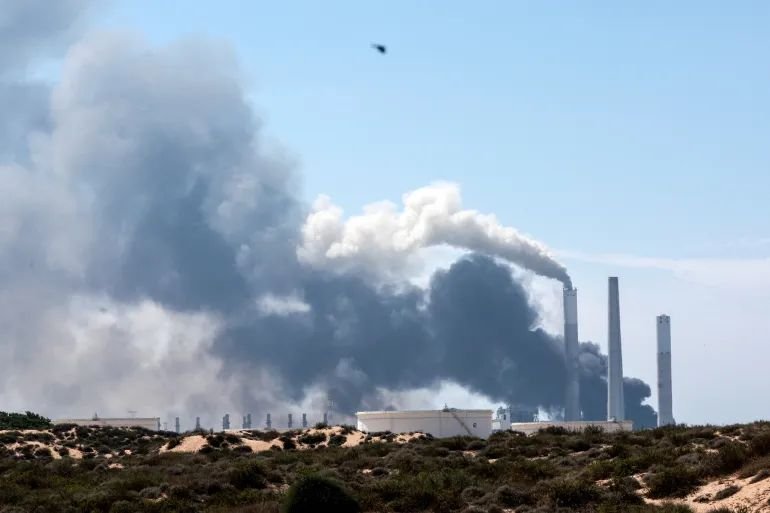
This occurs mainly at the Rotenberg and Orot Rabin power plants.
Critics say that electricity sustains military and civilian infrastructure.
This includes illegal settlements in the West Bank and East Jerusalem.
A UN report suggests global energy corporations facilitate military operations.
Glencore, based in Switzerland, is identified as a key actor in this facilitation.
They control mines in Mpumalanga and have ventures with politically connected firms.
Domestic Unrest and Opposition
Protests have occurred in major South African cities since 2024.
Demonstrators protest against coal exports to Israel.
Activists compare the campaign to the anti-apartheid boycott of the 1980s.
Trade unions have also voiced their criticism of the situation.
The General Industries Workers’ Union finds the situation unacceptable.
One cannot pursue genocide charges while simultaneously supplying coal.
Legal and Economic Considerations
The South African government hesitates to impose an export ban.
Officials warn of potential legal disputes under WTO rules.
They cite possible economic sanctions as well, which may be damaging.
The coal industry employs many and contributes greatly to South Africa’s GDP.
It remains a politically sensitive sector amid unemployment and slow growth.
International Dimensions
Momentum against Israel’s energy imports is building internationally.
Colombia suspended coal exports to Israel under presidential decree in 2024.
By mid-2025, 13 countries endorsed the “Hague Group” declaration.
These countries pledge coordinated measures to restrict military exports to Israel.
For Pretoria, the main conflict lies between morality and economic realities.