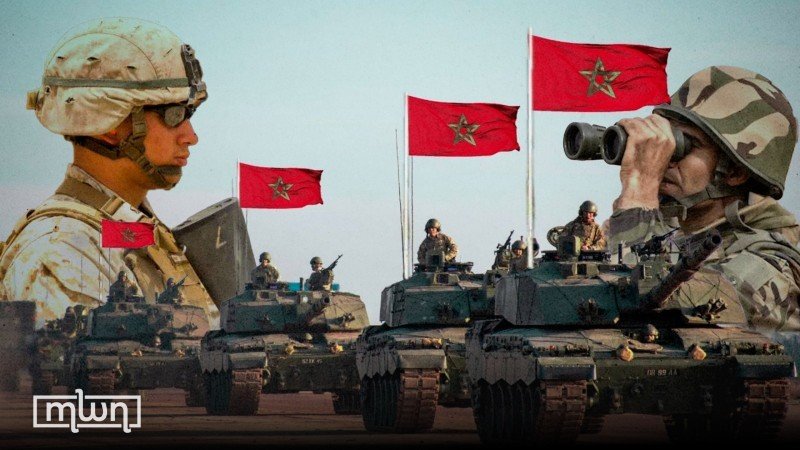
A recent Spanish poll indicates that far-right rhetoric perpetuates unfounded fears regarding Morocco among Spanish citizens. The CIS study, released on Thursday, revealed that 66.2% of Spaniards have considered the possibility of armed conflict in the coming years.
Of those, 42.2% identified Morocco as a potential adversary. Morocco ranks second only to Russia in this perception.
The survey suggests a significant portion of Spaniards, nearly 28%, believe a war with Morocco is feasible. This perception seemingly stems from deeply ingrained prejudices.
This is in contrast with genuine security assessments from Spanish officials. The CIS study involved 2,000 telephone interviews conducted between November 3-11.
Public Opinion Trends
Among Spaniards who considered potential conflicts, Russia leads at 57% as the most likely adversary. Morocco follows at 42.2%, and the United States at 30.2%.
Algeria is notably absent from the list, while China appears at 11.2% and Israel at 3%. The poll indicates increasing apprehension about military scenarios amidst global rearmament trends.
Dominant Concerns
The possibility of wars and conflicts ranks as a primary concern for those expressing recurring fears. It surpasses health, economic, or housing issues.
Approximately 76.8% of this group fears military escalation in what is perceived as an uncertain global landscape. Furthermore, 68% of Spain’s population believes the world is deteriorating.
Comparatively, 27.3% maintain optimism. Pessimism slightly improves when focusing on Spain’s domestic situation, with 67.7% expressing negative views versus 26.8% remaining optimistic.
Immigration dominates Spain’s security imagination
Immigration and Threat Perception
These findings correlate with data from the Royal Elcano Institute’s latest barometer, conducted between May and June. The study reveals Spanish sympathy toward Morocco barely reaches 4.6 out of 10.
This is significantly lower than ratings for Italy, Ukraine, or even Palestine. This negative perception intersects with immigration concerns.
Irregular migration remains the top European concern for Spaniards, surpassing the Ukraine war or poverty. Beneath these apprehensions persists a deeper cultural narrative.
A residual civilizational trope suggests that “the Moors will return.” This reversed historical echo still shapes segments of Spain’s collective imagination.
The Elcano study documents an evolution in Spanish threat perceptions. Morocco remains the primary perceived threat, with higher percentages than in previous surveys.
Russia holds second place in this perception. Specifically, 55% of Spaniards cite Morocco as a threat, compared to only 1% for Algeria.
Shifts in Threat Assessment
Following the 2022 outbreak of the Russia-Ukraine war, Spanish perception of Moscow as a potential threat increased substantially. It rose from 20% to 36%.
More striking is the change regarding the United States. The US jumped from 5% viewing it as a threat in 2024 to 19% in 2025.
This reflects concerns about policies perceived as disproportionately advantageous to Rabat and potentially risky for Spain’s Mediterranean position. These anxieties have led to speculation in Spanish media.
Some speculate that policies might recognize Ceuta and Melilla as Moroccan territory. For instance, there are suggestions of expelling Spain from NATO over defense spending.
This is an unprecedented threat that deeply unsettled Iberian public opinion.
A ‘Morocco complex’ persists in Spain
Historical and Social Drivers
The correlation between security fears, geopolitical outlooks, and attitudes toward Morocco points to deeper social and historical drivers of Spanish distrust. The perception is shaped by longstanding sensitivities over Ceuta and Melilla.
Lingering memories of past migration flashpoints and a persistent emotional attachment to the “Sahrawi cause” also contribute. These factors feed a narrative less about Morocco’s actual behavior and more about Spain’s unresolved historical anxieties.
These deeper layers explain why parts of Spanish public opinion and media harbor a “Morocco complex.” This complex is a mix of superiority, anxiety, and obsession.
Since the late Middle Ages, Morocco-Spain relations have been structured as a “contact zone” marked by overlap, rivalry, and mutual projection. The fall of al-Andalus and subsequent events shaped this dynamic.
The expulsions of Moriscos and Jews, the corsair wars, and later the protectorate in northern Morocco created a dense archive of memories. Spain cast Morocco as both a lost mirror and a permanent frontier.
For many Spaniards, Morocco is the symbolic “Other.” Spain negotiates its own unresolved questions about empire, religion, and Europeanness through this lens.
Morocco is often reduced to a security problem or territorial rival. It is rarely acknowledged as a modern state pursuing its own strategic project.
The 2021 crisis over Brahim Ghali’s reception in Spain showed how quickly these old reflexes can reappear. Morocco was framed as the aggressive neighbor, and Spain as a passive victim despite the episode’s roots in deliberate political choices.
Madrid recalibrates toward pragmatic cooperation
Shift Towards Cooperation
Yet this crisis also exposed the limits of treating Morocco as a minor peripheral file. Spain discovered that multiple sectors necessitated a functional relationship with Rabat.
These sectors included energy security, migration management, trade, and Atlantic-African access. The 2022 Spanish recognition of Morocco’s autonomy plan for the Sahara marked a return to strategic rationality.
It signaled that state institutions in Madrid had accepted a structural reality. Morocco is no longer a pawn but a regional power with leverage.
Since then, cooperation on various areas has increased. These areas include migration, energy interconnections, and joint projects.
The projects include Dakhla, the Atlantic corridors, and preparations for the 2030 World Cup. Renewed discussion of the Strait of Gibraltar tunnel has also surfaced.
The “enemy” image has not disappeared from all sectors of Spanish society. However, the center of gravity has shifted.
The evolving image is from conquest and loss to interdependence. It also shifted to the recognition that Spain’s African projection is inseparable from Morocco’s rise.
Despite these diplomatic advances, the Elcano barometer reveals 57% of Spaniards believe Europe should invest more in defense. Additionally, 52% would support sending troops to ensure security in Ukraine.
These are high numbers for a country historically reluctant toward military action.
Read also: Why the Far Right Loves Morocco in Paris and Loathes It in Madrid