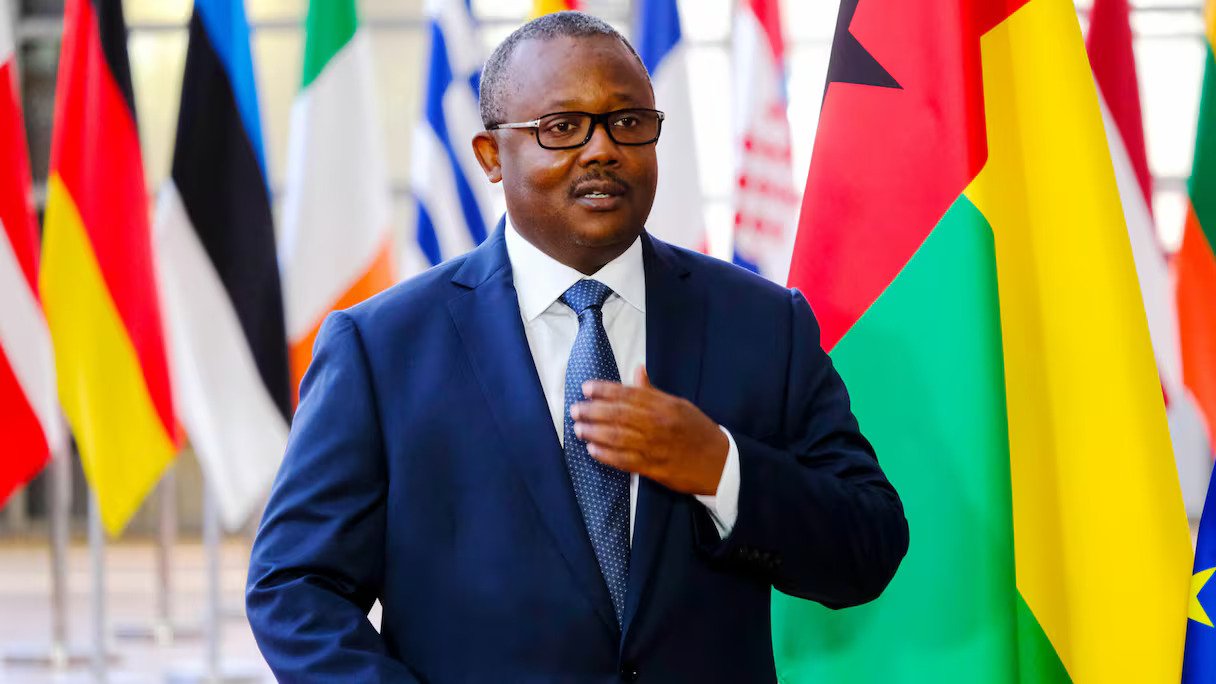
Former Guinea-Bissau President Umaro Sissoco Embaló has reportedly sought refuge in Morocco. His arrival follows a military coup that ousted him from power last week.
The deposed leader’s journey marks a new chapter in his exile. The November 26 takeover has faced international condemnation and allegations of orchestration.
Embaló departed from Brazzaville’s Maya-Maya airport last Wednesday morning on a private flight. Approximately twelve close associates accompanied him, officials report.
The former president spent only a brief period in the Congolese capital. He had arrived there from Dakar on November 29, authorities stated.
Political Context of the Coup
The military coup occurred three days after Guinea-Bissau’s disputed presidential election on November 23. Both Embaló and opposition candidate Fernando Dias claimed victory in the election.
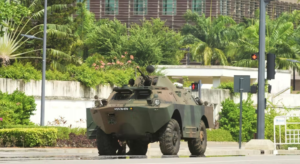
Military officers announced the seizure of power on state television. They also suspended the election due to alleged manipulation.
Military Justification for Takeover
General Horta N’Tam, formerly the army’s chief of staff, was installed as transitional president for one year. The putschists claimed their actions were necessary to restore order.
They also cited the need to combat drug trafficking networks that have plagued the West African nation. This justification has prompted skepticism from various sources.
Allegations of a Staged Coup
International observers and opposition figures have questioned the coup’s authenticity. Former Nigerian President Goodluck Jonathan accused Embaló of orchestrating a “ceremonial coup.”
He pointed to the unusual circumstances that allowed Embaló to hold press conferences. Jonathan also noted his ability to leave the country freely, raising suspicions.
Senegalese Prime Minister Ousmane Sonko echoed these suspicions, describing the takeover as a “scheme.” His criticism reportedly prompted Embaló’s departure from Dakar.
Morocco as a Strategic Refuge
The former president’s choice of Morocco as a potential safe haven appears strategic. Embaló maintained strong ties with Rabat during his presidency.
He also supported Morocco’s position on Western Sahara, solidifying their relationship. Guinea-Bissau has operated a consulate in Dakhla since October 23, 2020.
Embaló’s exile journey involved Burkinabé businessman Mahamadou Bonkoungou. Bonkoungou chartered the aircraft for the Congo leg, according to accounts.
The former president personally organized his accommodation at Brazzaville’s Radisson Blu hotel. He planned his brief stay meticulously before departing again.
A chronically unstable West African state
International Response and Condemnation
The coup has triggered swift international condemnation from various bodies. UN Secretary-General António Guterres denounced the takeover.
Guterres described the coup as a “serious violation of democratic principles”, reaffirming his concern. Both ECOWAS and the AU suspended Guinea-Bissau from their institutions.
Guinea-Bissau’s History of Instability
Guinea-Bissau, home to 2.2 million people, has experienced chronic political instability. This has occurred since its independence from Portugal in 1974.
The country has witnessed four successful coups and multiple attempted takeovers. These events are often linked to weak institutions and drug trafficking influence.
The nation serves as a crucial transit point for narcotics flowing from South America to Europe. This drug trade has repeatedly intersected with political crises.
Embaló had faced a legitimacy crisis before the election, further complicating matters. Opposition parties argued his presidential term had expired earlier this year.
The parliament had remained dissolved since December 2023. This occurred following what Embaló described as an attempted coup against his government.
The former president has denied orchestrating the military takeover, dismissing such claims. He stated that if he planned the coup, he would still be in power.
He has attributed the military action to senior officers from the Balanta ethnic group. These accusations add a further layer of complexity to the situation.
From Morocco, Embaló reportedly intends to travel to Portugal, his next destination. No official confirmation has emerged regarding his asylum request.
Rabat’s response remains uncertain as the situation continues to develop. Guinea-Bissau begins another uncertain political transition under military rule.