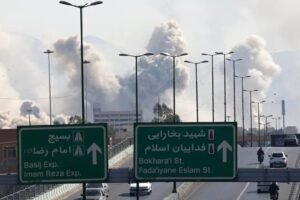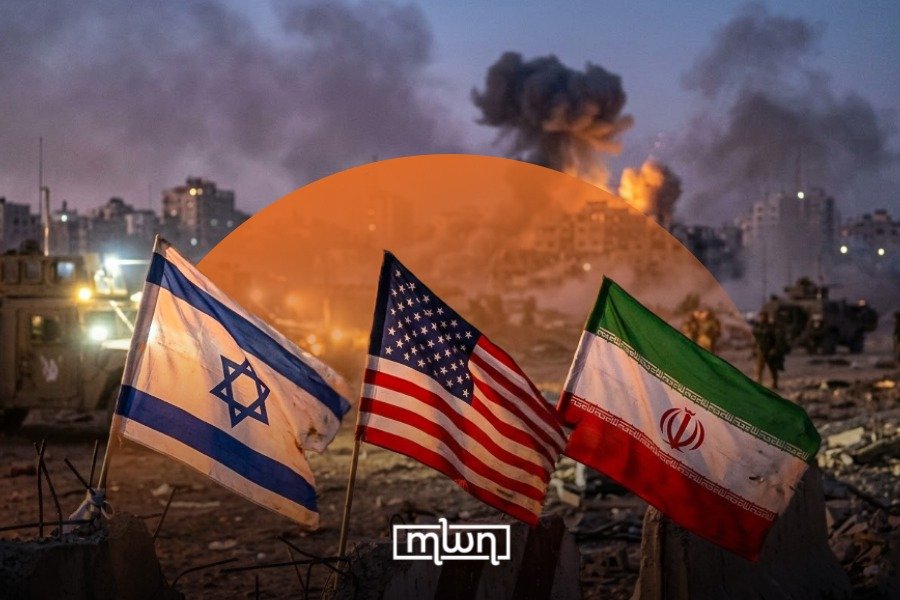
Wars are always predictable. However, no one knows when they will end. The scope, extent, and expected outcomes never yield a single winner or a single loser. The outbreak of the tripartite war between the United States, Iran, and Israel reflects the deadlock in negotiations because what is displayed as points of contention is only the visible part of the iceberg. The scorched earth strategy appears to Iran as a last resort, while for the United States and Israel, the exit strategy seems to be outdated.
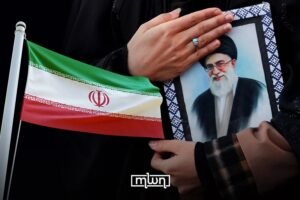
Here is a summary of a dialog between two political analysts I run into. They are surprised by the level of violence reached in the confrontation between the United States, Israel, and Iran. They didn’t expect that the stalemate would go as far as to eliminate the Supreme Leader Ayatollah Ali Khamenei.
Previously, the same analysts spoke of the outline of surprising alliances in the Middle East that, on the surface, resemble a déjà-vu situation, yet which fundamentally sketch the contours of a new and intriguing geopolitics in more than one way. What is happening indicates the critical phase that regional subsystems and adjacent security complexes are going through. These new developments give political planners and military strategists a hard time to assess the situation and come up with sound readings and proposals.
Indeed, the perception of geopolitics and political planning paves the way for dichotomous interpretations. It nevertheless has an exciting side that makes the game worth the candle. What could be more normal! A legitimate right in that, in this matter, the monopoly on knowledge proves to be an absurd claim. Although decision-makers and policymakers take the necessary precautions, they, under pressure, make mistakes all day long
Aware of this truth, decision-makers and policy planners are bound by the imperative of adaptation. A behavior that is unavoidable when their projections encounter obstacles that come out of the blue. This applies to their reading of the various dynamics associated with the balance of power in fragile security complexes. These security complexes no longer meet the adaptation requirements mentioned above; they fall victim to a frantic race for redeployment in haste.
It goes without saying that this results in a series of decisions that are both bizarre and unjustified, which state actors make to address the most urgent matters. In so-called democratic countries, the haste is conditioned by international political struggles and the influence of actors who operate behind the scenes. These actors can promote a more down-to-earth perspective and hardly care about the immediate impact beyond borders. They are, however, caught up by the reality on the ground and the chameleon-like tactics of their opponents.
In countries deemed less democratic, the personal imprint of decision-makers closes the debates on the relationship between the internal dimension and the external dimension. Indeed, this was true until recently, when the motivations behind strategic decisions were kept secret. Not the case nowadays. Deliberate or inadvertent leaks put individual decision-makers in a state of permanent vulnerability.
The ups and downs dilemma
Hence, the dilemma arises regarding the repositioning of national actors and international authors on the various security, political, and diplomatic chessboards. However, among all the actors included in this particular case, we find the so-called minor actors who draw attention for the purpose of the most parts of this article.
This is even more true given that the perception of the behaviors of minor actors is easier to notice on a chessboard temporarily abandoned by major international actors. Minor actors believe they can determine the political and diplomatic game at their leisure. They take advantage of the temporary resignation of their allies, major actors.
The so-called minor actors do not realize that the common objectives they initially shared with their major partner actors become a handicap in the medium and long term. This happens as the delegation of power does not mean a clear strategic parity or a blank check. In terms of division of labor, this amounts to the strict adherence to the strict tasks assigned to each party.
How can we explain this friction without the risk of missing the point? First of all, the dilemma of ambition and the fear of losing ground drive the beneficiaries of strategic intermittence to make mistakes in assessing geopolitical timing.
Hence the tendency of some of them to make inflated statements and publish communiqués from their foreign ministries, both relevant and irrelevant. They feel the water flowing beneath their feet, not as a sign of refreshing relief, but as a call to reinvent their analytical tools.
Next, there is the rush toward fast-food alliances to plug the gaps and buy time. This rush reflects a political and diplomatic panic that puts them in front of difficult choices they cannot psychologically make without causing and suffering huge damages.
Finally, the overestimation of power by actors who oscillate between being emerging powers and being reinvented proxies. That is to say, actors who served as substitutes during the downtime of strategic arrangements and who, taking advantage of the confusion among major allied actors, were entrusted with a certain logistical role in issues-areas where they tried to remain undisturbed.
Is the international system in transition? It always has been. But the current transition is visible and its mechanisms are predictable. For example, the battle for control of maritime passages falls within the framework of the belligerents’ willingness to preach falsehoods to obtain the truth.
The maritime passages, which had been relatively managed with a good faith in order not to disrupt international trade, are becoming a curse for the transit countries as well as for the main beneficiaries.
The cost of insurance and the risks of constant threats add to the apprehension of the phobia the fear of the unpredictable. The various episodes of piracy during the years 2014-2022 have brought to light incredible complicity scandals. Some decision-making centers within the targeted countries have been either the instigators or the beneficiaries.
During a recent visit in a country bordering the Indian Ocean, I learned that the pirates were known and operated right under the noses of the targeted countries. Complicity was undeniable in that certain pirate groups were beholden to foreign intelligence services whose countries were involved in the battle for ports and maritime passages.
What about those actors who are presented as more influential in the current state of affairs? Actors who no longer know which way to turn. Let us take the cases of Saudi Arabia, the United Arab Emirates (UAE), Egypt, Iran, Qatar, Turkey, Russia, Pakistan, and India.
The race for influence in a space as narrow as the Middle East is random. Therefore, it becomes problematic to understand the political and strategic misunderstandings between Saudi Arabia and the UAE. Allied at the beginning in the war in Yemen, they are now in direct conflict. The Qatari or Iranian pretext that they both use is fading. It reveals another security dimension with economic connotations, an economic race that is deemed to change the regional landscape.
The two models collide. The UAE’s aura in this matter takes a hit. The ambitions of Saudi Arabia are frightening its neighbors. However, both countries share a concern that drives them to neutralize each other, that is the degree and scope of normalization with Israel.
If the normalization of relations between the UAE and Israel has generated a lot of ink, the anticipated normalization between the latter and Saudi Arabia is being discussed with caution. Saudi Arabia is setting conditions, which are those of most Arab countries; however, it refrains from displaying a definitive public option. Because the political and social reforms introduced in the country are being fought against both internally and in the immediate neighborhood.
Overestimation of power
Israel is also joining the debate, particularly regarding Egypt’s role in the new security equation. Egypt seeks to strengthen its role as the preferred mediator in the Israeli-Palestinian conflict. This exaggerated perception is shown in its reaction to the Gaza Peace Council created by the United States. Moreover, the ambiguity applies to the now contested position of Turkey and Qatar. Both share the concern of realizing that the map of political Islam is losing its impact.
Turkey and Qatar cannot digest the new reality, namely the erosion of the role of proxy actors. The same goes for Iran, which is striving to salvage the situation. A volatile situation, as it is true that the objective of the Iranian decision-makers remains, despite the events that occurred last week-end, to prevent the regime from totally collapsing.
The intransigence of Iranian diplomacy on the nuclear issue, the ballistic missile program, and proxy actors in neighboring countries receives a severe blow on February 28, 2026. The death of Ali Khamenei complicates matters. Painful concessions are unavoidable to prevent the scenario of a radical regime change from becoming the only possible option.
Although it is too early to draw conclusions about total surrender or regime change in Iran, it is certain that the country will enter a period of uncertainty regarding the future of its political institutions. A transition period is necessary, but it is unlikely that the continuity of the regime, as conceived in 1979 and reshaped in 1989, can be sustainable.
Respecting the constitutional provisions regarding the succession of the Supreme Leader is a serious test of Iran’s repositioning on the regional and international diplomatic and security chessboard. A collegiate structure to make an authentic transition toward an authentic civil regime, in which the institution of the Supreme Leader would be symbolic and not executive, could be a solution. This collegiate structure had already been proposed ten years ago by former Iranian heads of state. The hawks within the system thwarted this scenario.
Obviously, the most urgent debate for the remaining Iranian decision-makers is not about maintaining a certain margin of maneuver to avoid the worst on the nuclear issue, but about considering a compromise solution to avoid provoking a civil war with incalculable consequences.
Within this framework, imposing a substitute regime during this difficult transition period without assessing the possibility of its acceptance by Iranians, regardless of their tendencies, would be a big mistake. The fragmentation of Iran is not an option. It could snowball and rekindle the old agendas aimed at shrinking in the Middle East that date back to 1916 and 1945.
Caution dictates that one should not underestimate Iran’s resilience capabilities, even though its bargaining chips on the nuclear issue, the ballistic program, and proxies are essentially blank slates. The negotiations will be even tougher for the Iranians because the goal now will be to neutralize Iran’s military capabilities and put an end to its nuisances in the neighborhood.
If negotiations were to resume tomorrow, Iran would have understood that it was alone and that no country would come to its rescue. The generalization of war would not be an option for the major actors witnessing a profound reconfiguration of the international system.
Similarly, unavoidable concessions will be essential for an actor as significant as Russia. Moscow’s role in the Middle East remains dependent on the success of its strategy focused on its Asian depth. For it is certain that the Russian bet on Europe will diminish further as long as the Russo-Ukrainian crisis remains unresolved in the near future.
Russian disillusionment was skillfully expressed during the Munich Security Conference in 2007. It was confirmed when, in 2008, the NATO Summit in Bucharest opened the way for the enlargement of the Alliance. Although they postponed NATO’s extension to Ukraine and Georgia, the member states were aware that the die had already been cast.
Russia responded by cutting off the supply of Russian gas to Europe via Ukraine (on the pretext that Ukraine had not honored its financial commitments to Moscow) and encouraged, then recognized, the unilateral independence of Abkhazia and South Ossetia, which were parts of Georgia.
The Middle East is in turmoil. Recent upheavals are shaping the contours of a geopolitics that pits actors against each other, always on the lookout not to lose at the finish line of the race. Such is the case with Pakistan. Pakistan fears the impact of the recently outlined economic corridor between India, the Middle East, and the European Union. Pakistani decision-makers are urged to remain vigilant in security, economic, and commercial matters.
The military clashes between Afghanistan and Pakistan raise the question of proxies that refuse to let go. The Taliban were created by the United States and Pakistan to drive Russia out of the region. The geopolitics of gas pipelines enters the debate. The rapprochement between Pakistan, Saudi Arabia, and Turkey does not humor other countries, particularly Israel and India.
The chances of success for the various strategic partnerships are limited; however, the right to competition is legitimate in politically fragile and economically volatile regional subsystems.
Fortuitous alliances are forming and misleading observers. Such is the case with the hypothetical alliance between Israel, the United Arab Emirates, and India. It is believed among their opponents that the tripartite alliance is promoted as a scheme against Islam and not as a legitimate claim for a common defense.
India is therefore at the center of new political, security, and diplomatic battle. Indeed, India positions itself as a substitute actor if China’s role is set to freeze with the aim of avoiding to enter into conflict with other sub-regional strategic competitors. For strategic restraint teaches that chasing several hares at once is a factor of programmed weakness.
Reinvention of proxies, a risky bet
From then on, one finds oneself in a situation where one moves from the outline of complementarity to the acceleration of blind competition. Here is a difficult equation to solve.
The desire to cooperate is fueled by the existence of complementary ingredients that lead to overlooking certain details. The idea is that the shortcomings contained in these details will be fixed once the machine is running at full capacity.
However, the opposite happens. The constraints of competition come into play and impose adjustments, which quickly clash with the law of neutralization. It may take time, but the conclusion is the same. We then enter another cycle that doesn’t seem so irrelevant: the cycle of temporary alliances. The BRICS, for example, which give the impression of a solid future alliance, are unable to adopt a clear strategy of unwavering solidarity.
On the contrary, the BRICS face the dilemma of laborious inclusion. The countries that were initially fascinated by the creation of this alliance are now hesitating to get in. If the BRICS constitute a counterbalance to American predominance, they err by being too optimistic about a profound overhaul of the structure of the international system.
Already, BRICS member countries are realizing that strength does not come with numbers. Similarly, the balance of power among the founding countries is weakened by their involvement in regional conflicts. The various interventions impose a certain restraint on them to maintain a minimum level of cohesion. However, the acceleration of exclusion processes leaves them with no bright alternatives.
Temporary alliances always in vogue to improve bargaining power or revisit the instrument of power that promote a controlled balance of the political chessboard. Nevertheless, temporary alliances reflect a state of permanent insecurity and increase the feeling of vulnerability. This is all the more evident as, in recent months, attempts to revive fading proxies have been witnessed.
The role of reinvented proxies is set to gain traction in issues-areas where the dynamics of accelerated destabilization are underway. This dilemma is experienced with the same intensity by countries like Iran, the United Arab Emirates, Saudi Arabia, and Qatar.
If proxies were at the center of negotiations between Iran and the United States before the military escalation on February 28, it is because the political situation in Syria and Iraq, for example, is troubled and does not bode well. Among the overlooked causes, there is the return to the political scene of figures who do not garner support either domestically or internationally.
The strategic chessboard is muddied by the multiplication of actors who don’t have the means to much their ambitions. So much so that intervention far from borders, which had long been an effective strategy to influence and bargaining, is losing its impact.
This strategy is becoming very costly. On the military front first and foremost. Next, on the issue of material temptation of certain decision-makers used to take advantage of the strategic blurry situations. The greed of the latter never ceases to increase.
For their part, the beneficiaries are panicking. The calculation of risks becomes laborious. Therefore, vulnerability becomes widespread. The hierarchy of actors in tight bargaining situations is weakened as the number of troublemakers increases and the game becomes boring.
Suffice it to say, that the old order is unlikely to be reproduced. Fragmentation is increasing. The liberal order belongs to the past. Europe must get on board or sink into its own swamp of contradictions and misperceptions. Russia, which is turning its back on Europe, must rethink its Asian policy and not put all its eggs in one basket. China, too, will not achieve success with every step taken toward strategic parity that it is currently trying to circumvent.
One question, however, deserves to be asked: Is multilateralism a tangible reality? Will the same major players have a chance to secure their seats in the new architecture based on the distribution of roles and the reshaping of strategic priorities?
The idea that is gaining ground is the waning influence of major international players. The latter see their room for maneuver evaporate and their influence shrink like a skin of sorrow. One of the problematic observations to be taken into account is the magnitude of the struggle opposing different intra-national decision-making systems among both major and minor actors.
The confusion also comes from the perception of what is called the “deep state.” The divergences in political and strategic planning, which should be kept behind the scenes, are broadcasted through channels linked to various intra-national interests.
If the concern of all major and minor state actors is to maintain the balance of power, as observed to date, at the same level of control, the obstinacy of proxy actors will continue to sow discord, particularly within the security complexes that are experiencing an unprecedented fervor since 2008.
This date is important because it coincides with the third international financial crisis, the ups and downs in relations between Europe and Russia, the laborious initiatives such as the Union for the Mediterranean, the Eastern Partnership, and the twists and turns of the Arab Spring.
The post-Covid 2022 period adds a spanner in the works. Political planners and military strategists find it difficult to produce forward-looking analyzes that can reassure policymakers in their respective countries. This explains why the balance of power paradigm, dear to the realist school of international relations, is implemented through makeshift alliances.
The haste with which these alliances are built is a panicked behavior that reflects increasing vulnerability and sensitivity, challenging the hierarchy of actors and the sustainability of the new alliances poorly established. The violence in the Middle East and the military escalation between Iran, Israel, and the United States demonstrate the growing vulnerability of all actors in the region.
The evolution of the political situation in Iran will condition the relations between the member countries of the Gulf Cooperation Council, the role of strategic intermediaries such as Egypt or Turkey, and the now critical position of Israel in the reconfiguration of the regional security complex.