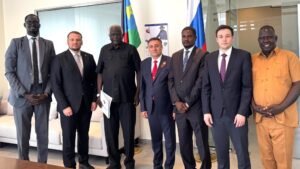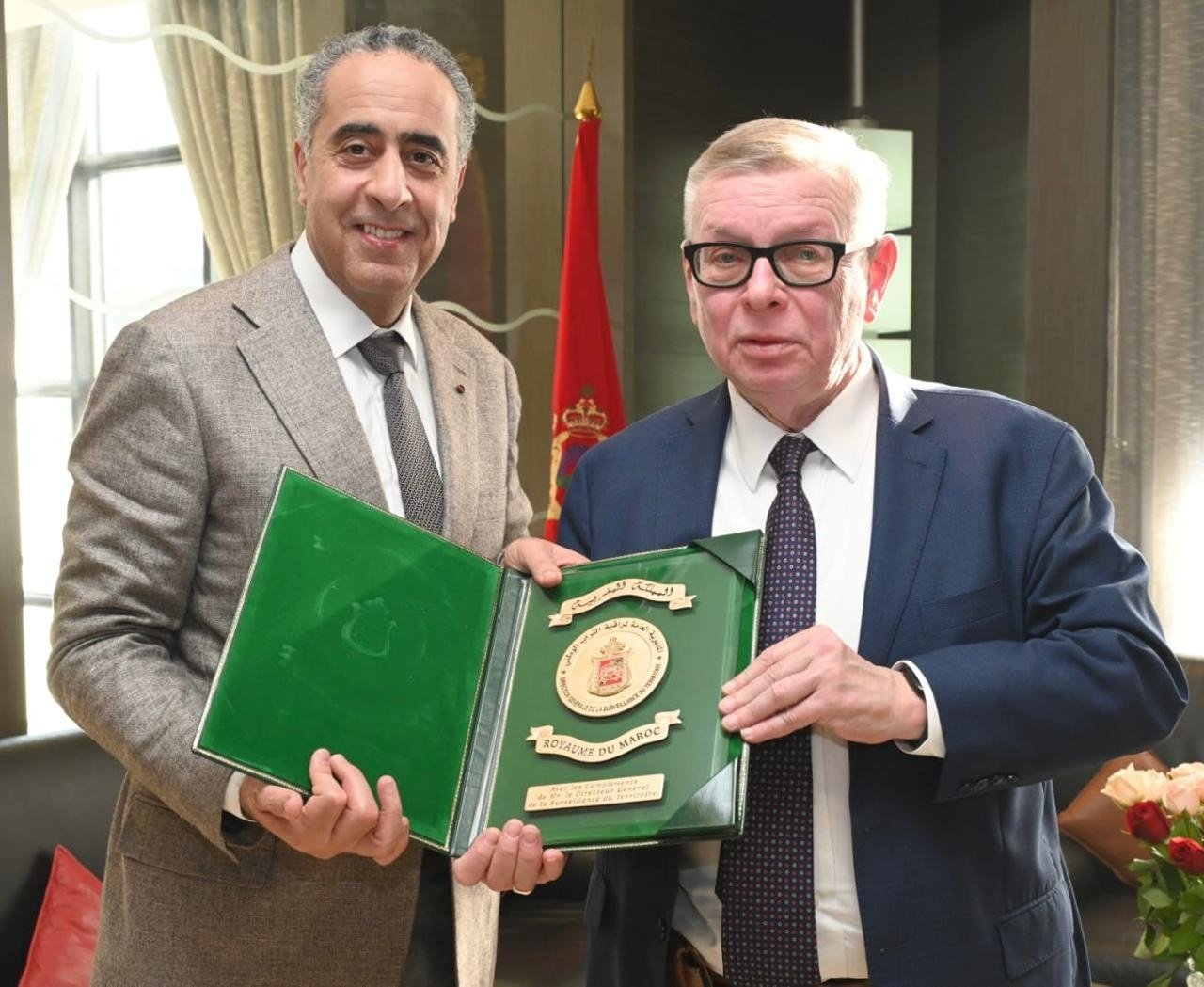
Marrakech – Morocco’s Director General of National Security and Territorial Surveillance, Abdellatif Hammouchi, met with Alexandre Zouev on Monday. Zouev is the UN Office of Counter-Terrorism’s (UNOCT) newly appointed Deputy Secretary General. The meeting occurred during Zouev’s working visit to Rabat.
The two officials addressed emerging challenges related to rising terrorist risks. These risks span multiple global tension zones. The discussions took place at the DGSN-DGST headquarters.
The discussions centered on strengthening cooperation between Morocco and UNOCT. Parties also examined mechanisms for preventing violent extremism. They looked at coordinated responses to terrorist activities.
Zouev expressed interest in learning from Morocco’s security experience in combating terrorism. He described Morocco’s approach as important. He also emphasized the necessity of strengthening international cooperation against terrorist organizations.
Regional and International Anti-Terrorism Initiatives
The talks also covered coordination of anti-terrorism initiatives. These initiatives span regional and international levels. Officials discussed expanding these initiatives to secure major sporting events. They aim to defend against terrorist risks and threats.
The UN official noted that Morocco’s counter-terrorism experience is valuable. It could help deprive terrorist organizations of essential resources. These include safe havens, funding, and recruitment networks.
Morocco’s Counterterrorism Architecture
Morocco has developed a robust counterterrorism architecture. The Central Bureau of Judicial Investigations (BCIJ) anchors it. The BCIJ operates under the DGST’s umbrella.
This strategic posture has been reinforced by operational success. Interior Minister Abdelouafi Laftit stated that Morocco has dismantled over 200 terrorist cells since 2002. This underscores the country’s vigilance against extremist threats.
Morocco’s counterterrorism strategy extends beyond domestic operations. It relies heavily on international cooperation. Spain and France are key European partners.
Strategically, Morocco bridges North Africa and Europe. Its location, strong security institutions, and intelligence partnerships are critical. These factors make it a vital actor in combating violent extremism and jihadist networks.
Upcoming International Conference
Security partnerships grow stronger
The meeting precedes Morocco hosting the first International Conference dedicated to African victims of terrorism on December 2-3 in Rabat. The Ministry of Foreign Affairs organizes this event with support from the UNOCT. This event is unprecedented in its focus.
The conference will gather government representatives from African countries. International organizations and terrorism victim associations will also attend. Researchers and experts will participate as well. Discussions will focus on survivors’ roles in prevention and resilience.
Participants will address terrorism’s human consequences, plus legal, institutional, and socio-economic challenges. These challenges relate to supporting victims. The event strengthens Morocco’s partnership with UNOCT. UNOCT established its Africa Program Office in Rabat.
Recent INTERPOL General Assembly
The coordination meeting follows Morocco’s successful hosting of INTERPOL’s 93rd General Assembly. The Assembly took place in Marrakech from November 24-27. Hammouchi described the assembly as successful at all levels.
Over 800 delegates from 179 countries attended the four-day conference. Eighty-two police chiefs were among the attendees. The assembly focused on disrupting transnational organized crime networks. It also aimed to dismantle transnational scam centers.
New Capabilities Launched
INTERPOL launched two new capabilities during the assembly. Nexus, a web-based messaging platform using AI, helps structure information delivery. AVA, the first AI virtual assistant for law enforcement, will also assist officers.
The assembly also elected Lucas Philippe as the new INTERPOL president. He replaces Ahmed Naser Al-Raisi. Hammouchi praised Al-Raisi’s leadership during his tenure. He also expressed commitment to cooperating with the new president.
The DGSN-DGST statement indicates that the meeting reflects Morocco’s growing international role. It underscores Morocco’s importance as a reliable partner in anti-terrorism efforts.
The discussions demonstrate the country’s commitment to security. This commitment includes strengthening bilateral and multilateral cooperation mechanisms.